
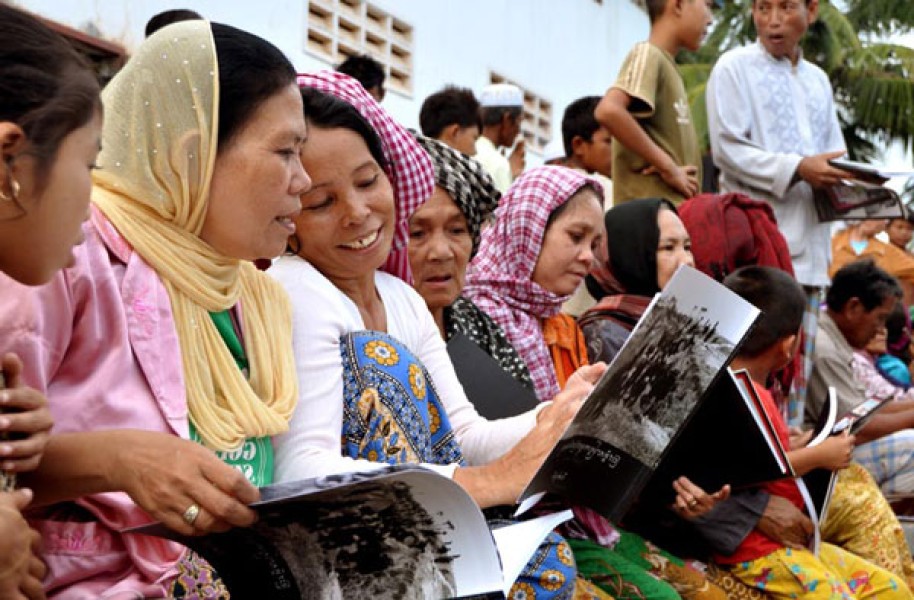
In periods of conflict or authoritarianism, women often become targets of human rights violations because of their gender and the marginalization they suffer in many societies. They may be subjected to physical and sexual violence, as well as other violations that affect them in unique ways, such as enforced disappearance of their loved ones, displacement, and socioeconomic discrimination.
For example, women whose husbands are forcibly disappeared in conflict can suffer prolonged psychological trauma, unjust legal barriers, and other forms of discrimination because of their ambiguous status as neither married nor officially widowed. They endure a higher risk of exploitation due to poverty worsened by the loss of a primary breadwinner and ostracization by their families and other close social networks.
Compounding these harms, women’s ability to seek recourse is often severely limited, due to structural inequalities. Even transitional justice mechanisms themselves can be blind to the particular needs of women if badly designed, and responses can mirror the gendered power imbalances in society at large.
While women are often among the most marginalized in society, requiring specific attention and targeted transitional justice responses, gender justice is not only concerned with women. All victims’ experiences need to be assessed for gendered implications. A gender-sensitive approach to transitional justice examines and address the full range of experiences, including of male victims in special contexts as well as LGBTQI victims.
Can Transitional Justice Help Promote Justice for Victims of Sexual and Gender-Based Violence?
Transitional justice responses to gender-based violations during conflict and authoritarian rule are essential for ensuring justice for victims, combating women’s marginalization, and preventing future violations against women and other groups targeted for their gender. Of equal importance is ensuring that transitional justice measures meaningfully address the causes and consequences of all abuses against women—even those that are not inherently gender based.
The past few decades have seen considerable progress in terms of public acknowledgment of gender inequality, gender discrimination, and gender-based human rights violations. Too often, however, these acknowledgments do not translate into effective implementation. Much of this failure comes from a lack of technical knowledge on how to implement measures in ways that encourages women’s participation and adequately addresses the gendered nature of human rights violations.
This shortcoming is compounded when women are also excluded from the decision-making process. Women must play a central role in the design and implementation of transitional justice measures if policy is to adequately respond to their needs. This is especially true when attempting to implement policy amid ongoing sexual and gender-based violence, where the will and capacity of authorities to investigate falls short.